
Brain Entrainment: Tuning the Mind Like an Instrument


The brain is not a fixed organ.
This is one of the most significant findings of modern neuroscience, and one of the most underutilised in everyday wellness practice. The brain is dynamic, adaptive, and exquisitely sensitive to its environment. It changes in response to experience, to practice, to trauma, and to the frequencies it is exposed to.
Including the frequencies we deliberately introduce.
This is the science behind brain entrainment. And once you understand it, the idea of leaving your brain's state to chance to the accumulated noise and pressure of daily life begins to seem like a significant oversight.
What the brain is actually doing
The brain communicates electrically. Billions of neurons firing in patterns and those patterns produce measurable electrical rhythms called brainwaves. These rhythms are not random. They correspond to distinct states of consciousness, cognitive function, and physiological activity.
Neuroscientists have identified five primary brainwave states:
Delta: the slowest frequencies, between 0.5 and 4 Hz. Associated with deep dreamless sleep, cellular regeneration, and the body's most profound healing processes. This is the state where the body repairs itself most efficiently.
Theta: between 4 and 8 Hz. The state between waking and sleep. Associated with deep meditation, emotional processing, vivid imagery, insight, and access to material that sits beneath conscious awareness. Experienced meditators spend significant time here. Most people only pass through it briefly while falling asleep.
Alpha: between 8 and 13 Hz. A relaxed, present, receptive state. The mind is calm but aware. Creativity flows. Integration happens. This is the state most associated with genuine rest while still conscious, and most people rarely access it during waking hours.
Beta: between 13 and 30 Hz. The waking, thinking, problem-solving state. Useful and necessary, but when chronic stress keeps the brain locked in high beta, it becomes the state of anxiety, rumination, and hypervigilance.
Gamma: above 30 Hz. Associated with peak cognitive performance, heightened perception, and states of deep compassion and insight. Long-term meditators show significantly more gamma activity than the general population.
Most people in modern life spend the vast majority of their waking hours in beta and a significant portion of that in the elevated, anxious end of the beta range.
The deeper states - alpha, theta, delta - where genuine rest, healing, integration, and insight happen are either inaccessible or fleeting.
Brain entrainment changes that. Deliberately. Measurably.
The frequency following response
In 1839, German physicist Heinrich Wilhelm Dove discovered something remarkable.
When two tones of slightly different frequencies are presented separately to each ear, the brain does not simply hear two tones. It perceives a third tone - the mathematical difference between them - and begins to synchronise its own electrical activity to that perceived frequency.
This is the frequency following response. The brain, exposed to a consistent external frequency, naturally falls into step with it. Like a tuning fork that causes another nearby tuning fork to begin vibrating at the same frequency, a phenomenon called resonance, the brain entrains to external rhythmic stimuli.
Dove's discovery, what we now call binaural beats, was the foundation. The science has since expanded significantly.
Monaural beats, isochronic tones, and photic stimulation - rhythmic pulses of light at specific frequencies - all produce the same fundamental effect through different mechanisms. The brain perceives a rhythmic external signal and synchronises with it.
The practical implication is profound. Rather than waiting years for meditation practice to naturally develop the capacity to access deep brainwave states , the brain can be guided there deliberately, through precisely calibrated external frequencies.
What neurofrequency therapy does
Neurofrequency therapy takes the principles of brain entrainment and integrates them with light-based technology to create a multisensory entrainment experience of considerable precision and depth.
Specific wavelengths of light, delivered through PureWave LED technology at precise frequencies corresponding to each of the body's seven energy centres work in concert with brain-sync frequency music. The acoustic frequencies and the photic stimulation work simultaneously, engaging both auditory and visual neural pathways in the entrainment process.
The external stimuli are converted into electromagnetic impulses that the body reads and responds to. The brain begins to follow. The nervous system follows the brain. The field follows the nervous system.
What this produces is not relaxation in the ordinary sense. It is a guided shift in brain state moving the brain out of the high-beta stress and survival patterns most people are locked in and into the alpha and theta states where genuine healing, emotional processing, and deep restoration become possible.
The chakra light component adds a further dimension. Each energy centre in the body has a corresponding electromagnetic frequency and the narrow-band LED wavelengths used in neurofrequency therapy are calibrated specifically to these frequencies, rather than the blended colour approximations used in conventional light therapy. This precision matters. The difference between a broad-spectrum approximation and a targeted narrow-band frequency is the difference between ambient sound and a tuning fork.
The body knows the difference.
Brain entrainment and the healing window
There is a concept in neuroscience sometimes called the healing window — the brainwave states in which the body's natural repair mechanisms operate most efficiently.
Theta and low alpha are that window.
In these states, cortisol is low. The parasympathetic nervous system is dominant. The immune system operates more effectively. Emotional material that has been held below the level of conscious awareness becomes accessible — not as crisis, but as clarity. The prefrontal cortex — the seat of insight, integration, and genuine decision-making — re-engages after being suppressed by chronic stress.
This is why people often emerge from brain entrainment sessions with insights they couldn't access through thinking. Why emotional releases happen that feel complete rather than destabilising. Why the body feels different — lighter, less held, more its own — after a session that required no effort whatsoever.
The brain was simply guided to the state where its own intelligence could operate freely.
Why this matters beyond the session
The effects of brain entrainment are not confined to the session itself.
Neuroplasticity - the brain's capacity to form new neural connections and reorganise itself - is significantly enhanced in theta and alpha states. This means that the insights, the releases, and the shifts that occur during a session are more likely to integrate to become new patterns rather than temporary experiences.
Regular brain entrainment practice has been shown to produce lasting changes in baseline brainwave activity. The brain begins to spend more time in calmer, more coherent states naturally, without the stimulus. The nervous system's default setting shifts.
This is the difference between a treatment and a transformation. Not a temporary improvement in how you feel. A genuine change in how your brain operates as a baseline.
The instrument you have been neglecting
Every musician knows that an instrument left untuned drifts. The strings slacken. The resonance goes flat. The music it produces is a diminished version of what the instrument is capable of.
The brain is the most sophisticated instrument you will ever work with. And most people leave it entirely untuned, shaped by stress, noise, accumulated pressure, and the relentless demands of a world that has very little interest in their neurological wellbeing.
Brain entrainment is tuning. Precise, intentional, evidence-based tuning.
And a tuned instrument plays differently. It resonates more fully. It produces something closer to what it was designed for.
So does a tuned brain.
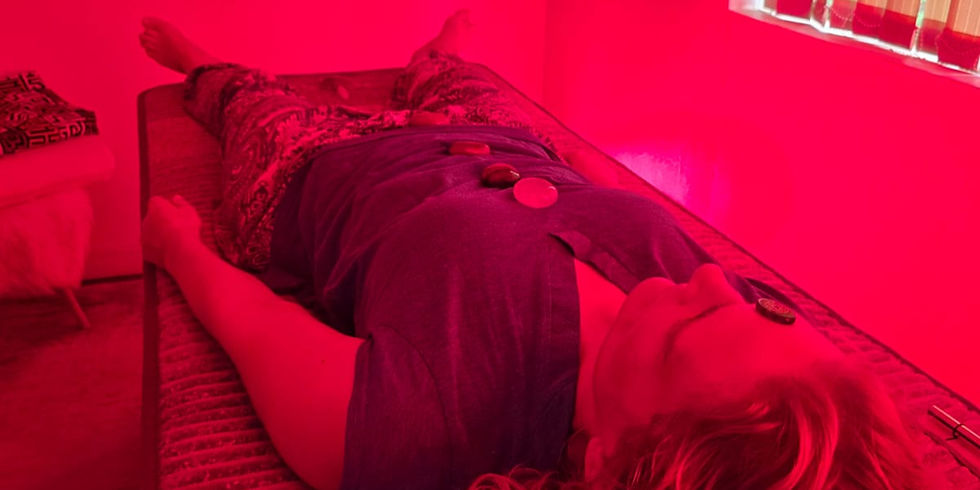
Neurofrequency therapy is integrated into private sessions combined with PEMF, red light therapy, sound, and energy work for a genuinely multidimensional experience.
If you are ready to work at the level of the brain, the nervous system, and the energy field simultaneously, this is where we begin.
Book a private session at aliadatoo.com


Comments