
Red Light, Deep Healing

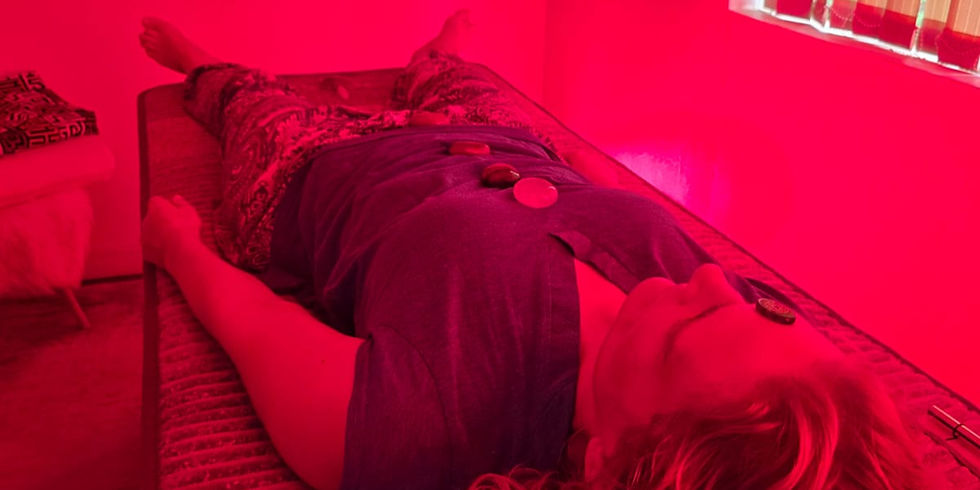
Light is not passive.
We tend to think of it as something we see by. Background. Ambient. A condition for visibility rather than a force in its own right.
But light is energy. Specific wavelengths of light carry specific amounts of energy and biological tissue responds to that energy in precise, measurable ways. The body has been responding to light since long before we had language for it. Every circadian rhythm, every seasonal shift in mood and energy, every instinct to seek sunlight — these are the body's intelligence recognising something it needs.
Red light therapy takes that intelligence and applies it with precision.
What red light therapy is
Red light therapy, clinically known as photobiomodulation, uses specific wavelengths of red and near-infrared light, typically in the range of 630 to 850 nanometres, to penetrate the skin and interact with the body's cells.
Unlike ultraviolet light, which damages tissue, or visible light, which is largely absorbed at the surface, red and near-infrared wavelengths penetrate deeply reaching the skin, muscle, fascia, and in some cases bone. At the cellular level, they interact with a specific component of the mitochondria called cytochrome c oxidase, an enzyme that plays a central role in cellular energy production.
The result is measurable, significant, and surprisingly wide-ranging.
The mitochondrial connection
To understand why red light therapy works, it helps to understand what mitochondria actually do.
Mitochondria are the energy-producing structures within every cell. They convert oxygen and nutrients into ATP, adenosine triphosphate, the molecule that powers virtually every biological process in the body. Cellular repair. Immune function. Hormonal regulation. Cognitive function. Every process that requires energy — which is to say, every process — depends on mitochondrial efficiency.
Chronic stress, inflammation, environmental toxins, poor sleep, and ageing all impair mitochondrial function. ATP production drops. Cells become sluggish. The body's repair mechanisms slow. Inflammation increases. Recovery takes longer. Cognition dulls.
Red light therapy directly stimulates cytochrome c oxidase in the mitochondria increasing ATP production, reducing oxidative stress, and essentially waking up cells that have become metabolically slow.
This is not a superficial effect. It is a fundamental restoration of cellular energy and it cascades upward through every system that depends on it.
What the research documents
The research base on photobiomodulation is extensive spanning dermatology, neurology, sports medicine, psychiatry, and regenerative medicine.
Skin health and cellular repair: red light therapy accelerates wound healing, stimulates collagen production, and reduces the markers of cellular ageing. A 2014 study published in Photomedicine and Laser Surgery documented significant improvements in skin complexion, texture, and collagen density following red light therapy application.
Inflammation: Red Light Therapy reduces pro-inflammatory cytokines and increases anti-inflammatory markers. This has implications not just for acute injury but for the chronic low-grade inflammation that underlies most modern health challenges from autoimmune conditions to cardiovascular disease to depression.
Mood and cognitive function: research on red light therapy applied to the brain (transcranial photobiomodulation) shows measurable improvements in mood, cognitive performance, and symptoms of depression. A 2018 study published in Behavioral and Brain Functions documented significant reductions in depressive symptoms following near-infrared light therapy applied to the forehead.
Muscle recovery and performance: the evidence on red light therapy for physical recovery is among the most consistent in the literature. Multiple studies demonstrate reduced muscle soreness, faster recovery from intense exercise, and improved endurance performance. Enough that red light therapy has become standard in elite sports recovery programmes globally.
Sleep quality: Red Light Therapy influences melatonin production and circadian rhythm regulation. Research demonstrates improvements in sleep quality and duration following regular red light therapy, particularly relevant given that poor sleep is one of the most widespread and most underestimated health challenges of our time.
Light as information
There is a broader principle at work here that goes beyond the specific mechanisms.
The body reads light as information. It always has. The quality, colour, and intensity of light tells the body what time it is, what season it is, and what physiological state it should be in. Sunrise light tells the body to wake and activate. Sunset light begins the process of winding down. Full-spectrum midday light supports vitamin D production, mood regulation, and immune function.
Modern life has largely disrupted this conversation. We spend most of our days under artificial light that tells the body very little of biological value. We are chronically under-exposed to the wavelengths our cells actually need.
Red light therapy restores part of that conversation. It delivers, at a therapeutic dose, wavelengths the body knows how to use, and uses immediately.
How red light integrates into multidimensional sessions
In the context of energy and frequency work, red light therapy does something specific and valuable.
It works at the physical foundation - the cell. Before any other intervention, it begins the process of cellular restoration. Mitochondria activate. ATP production increases. Inflammation begins to reduce. The body shifts into a more receptive, more regulated state.
This physical foundation matters enormously for what follows.
Energy work, sound, and nervous system regulation all operate more effectively in a body whose cellular environment is already shifting toward repair. Red light does not replace the deeper work. It creates the biological conditions for that work to land more deeply and last longer.
In a session that integrates red light, PEMF, neurofrequency therapy, and energy work, each element is addressing a different layer of the same system - physical, electromagnetic, neurological, energetic. The combined effect is genuinely greater than the sum of its parts.
This is what multidimensional healing actually means. Not a collection of modalities. A coherent approach to the whole system.
What people notice
The immediate experience of red light therapy is subtle. Gentle warmth. A quality of stillness that is different from simply sitting quietly. Many people notice a shift in physical tension, a softening in the body that happens without effort.
Over time and with regular sessions, what people report is more significant. Skin that looks different. Energy that feels more consistent. Sleep that is deeper. Recovery - physical and emotional - that happens faster. A sense of the body working with them rather than against them.
This is cellular health made visible. And it is available to almost everyone.
Red light therapy is integrated into private sessions as part of a comprehensive, multidimensional approach to health, recovery, and energetic wellbeing. If you are ready to work at the level where real restoration begins, this is where we start.
Book a private session at aliadatoo.com


Comments