
What Family Constellations Has to Do With Your Health

The science of systemic patterns, epigenetics, and inherited stress and why resolving what you inherited may be the most important health intervention you haven't considered

There is a question that sits beneath most chronic health challenges.
Not always visible. Not always asked. But present nonetheless in the patterns that repeat despite genuine effort to change them. In the exhaustion that has no clear cause. In the anxiety that persists after every external reason for it has been addressed. In the illnesses that arrive without obvious explanation. In the sense that something is being carried that does not quite feel like one's own.
The question is this: how much of what you are experiencing belongs to you and how much did you inherit?
This is not a philosophical question. It is a biological one. And the science emerging from the fields of epigenetics, interpersonal neurobiology, and systemic psychology is providing answers that are as precise as they are paradigm-shifting.
We do not begin life as blank slates. We begin it as the latest expression of a system - a family, a lineage, a community that has its own history, its own unresolved experiences, and its own patterns of response to the world. And that system lives in us. In our nervous systems. In our gene expression. In the ways we unconsciously organise our experience, our relationships, and our bodies.
Family Constellations is the methodology that works directly with this reality. And understanding what it does requires understanding something that most people were never taught about their own biology.
The body you inherited
Every cell in your body contains DNA inherited from your parents, their parents, and the generations before them. This much is widely understood.
What is less widely understood is that you did not just inherit the sequence of that DNA. You inherited its expression - the pattern of which genes are switched on and which are switched off, shaped by the experiences of the people you came from.
This is epigenetics. The science of how environmental and experiential factors modify gene expression without altering the underlying genetic sequence. And the findings emerging from this field over the past two decades are genuinely extraordinary.
In 2013, researchers at Emory University conducted a landmark study on epigenetic inheritance. They trained mice to fear a specific scent by pairing it with a mild electric shock. The offspring of these mice who had never been exposed to the scent or the shock were born with a heightened sensitivity to that specific scent. Their nervous systems were primed for a threat their parents had experienced and they had not.
The generation after them showed the same sensitivity.
The fear response had been inherited. Not as a memory. As a biological pattern encoded in the nervous system and in the epigenetic modifications to DNA that shaped how specific genes were expressed.
The implications for human health are profound.
What the human research shows
The research on epigenetic inheritance in humans is now substantial.
Studies on the descendants of Holocaust survivors have documented measurable differences in cortisol regulation compared to control groups. The children and grandchildren of survivors show altered HPA axis function that is the body's primary stress response system to be consistent with exposure to chronic threat, despite having no direct experience of the events that shaped their ancestors' physiology.
Research on the descendants of individuals who experienced famine consistently documents physiological differences that track not individual experience but ancestral experience. Metabolic patterns. Stress response patterns. Inflammatory profiles. Shaped by what the people who came before endured.
This is not trauma as metaphor. This is trauma as biological inheritance encoded in the nervous system, in epigenetic modifications, in the physiological patterns that shape how a person experiences their body and their world, often without any conscious awareness of the origin.
And it does not stop at the physiological level.
The systemic field
Bert Hellinger the German psychotherapist who developed Family Constellations in the latter half of the twentieth century observed something consistent across thousands of sessions with thousands of families from radically different cultural backgrounds.
Family systems have their own intelligence. Their own organising principles. And when those principles are violated- when someone in the system is excluded, forgotten, denied, or when a trauma is left unacknowledged - the system does not simply move on. It finds a way to remember. Usually through a later generation, a grandchild, a great-grandchild who begins unconsciously living out, repeating, or compensating for what was left unresolved.
Hellinger called this entanglement. The unconscious identification with an ancestor or family member the carrying of something that is not one's own, often without any awareness that this is what is happening.
The person experiencing it does not know why they feel the way they feel. Why a particular pattern keeps repeating. Why a certain heaviness has always been present. Why certain themes like illness, failure, isolation, early death, relationship breakdown seem to move through the generations with a consistency that cannot be explained by individual psychology alone.
What Constellations makes visible through a process that works with the field of the family system rather than with individual narrative is the hidden dynamics that are driving these patterns. And what it makes possible is resolution. Not through analysis or insight alone, but through a shift in the field itself. A movement toward what Hellinger called the orders of love the natural principles that allow a system to function in health and wholeness.
Why this is a health intervention
The connection between systemic entanglement and physical health is one that practitioners of Constellations have observed for decades. The scientific framework to explain it has been arriving gradually through epigenetics, through interpersonal neurobiology, through the research on intergenerational trauma.
When a person is unconsciously carrying something that does not belong to them the unresolved grief of a grandparent, the excluded member of a system whose fate is being unconsciously repeated, the loyalty to an ancestor expressed as self-sabotage or chronic illness, the body carries it too.
Not as a metaphor. As a physiological load.
The nervous system that is organised around an inherited threat response is a nervous system that cannot fully regulate, regardless of how much individual therapeutic work is done. The immune system operating in the shadow of inherited inflammatory patterns will tend toward dysregulation. The body holding an unconscious identification with an ancestor who died young, who suffered a particular illness, who was cut off from the system will often express that identification somatically.
What Constellations does when it works at the level of the field and produces genuine resolution is not just psychological relief. It is a systemic unburdening. The body releases what it has been holding on behalf of the system. The nervous system reorganises. The physiological load of what was inherited begins to lift.
People describe this in very physical terms. A weight they did not know they were carrying suddenly gone. A chronic tension in the body that has been present for as long as they can remember suddenly softer. Energy available that was not available before. A quality of lightness that is not about mood — but about the body itself.
Constellations and epigenetic resolution
There is an emerging body of thought supported by the research on neuroplasticity, on epigenetic modification, and on the psychophysiology of trauma resolution that suggests genuine systemic resolution may produce epigenetic effects.
If trauma and unresolved experience can be encoded epigenetically and transmitted across generations, then genuine resolution at the level of the field, at the level of the system may be capable of producing epigenetic shifts. Not just psychological shifts. Biological ones.
This is at the frontier of what science can currently measure. But the clinical observations are consistent. And the theoretical framework, grounded in what we know about the bidirectional relationship between psychological state and gene expression, is coherent.
The body that has been released from what it was carrying systemically, ancestrally is a different biological environment. And a different biological environment expresses differently at every level, including the genetic.
What a Constellations session is and is not
Family Constellations is not therapy in the conventional sense. It does not work primarily through narrative or analysis. It does not require the client to have a detailed understanding of their family history. In fact, some of the most powerful work happens when very little is known.
It works with the field. With the intelligence of the system. With what wants to be seen, acknowledged, and returned to its rightful place.
A session may involve representatives or other people who stand in for family members and report what they experience in the field or it may work through floor markers, figures, or a facilitated inner process. The format varies. What does not vary is the principle that the system has its own intelligence, and that intelligence, when given the conditions to express itself, consistently moves toward resolution.
What a good Constellations session produces is not a story. It is a shift. Something that was entangled begins to untangle. Something that was unconscious becomes visible. Something that was being carried is returned to where it belongs.
And in the weeks and months that follow, the effects continue to integrate in the body, in relationships, in the patterns that begin quietly, almost imperceptibly at first to reorganise.
The question worth asking
Most people who seek help with a health challenge begin with the most recent chapter of their story. Their current symptoms. Their current stress. Their current patterns.
This is a reasonable place to begin. But it is rarely where the story starts.
The story often starts earlier. Sometimes much earlier. In the experiences of the people who came before. In the losses that were not grieved. In the members of the system who were excluded or forgotten. In the events that were too large to be fully processed by the generation that experienced them and so were passed forward as patterns, as physiology, as the particular quality of weight that some people have always felt without ever being able to explain.
Constellations asks with respect, with care, and with a genuine understanding of what family systems carry, what else is here? Who else is here? What has been inherited that was never intended to be permanent?
And in the answer to those questions, something becomes possible that individual work alone cannot always reach.
The health of the whole. Not just the individual. But the system past, present, and the generations still to come.
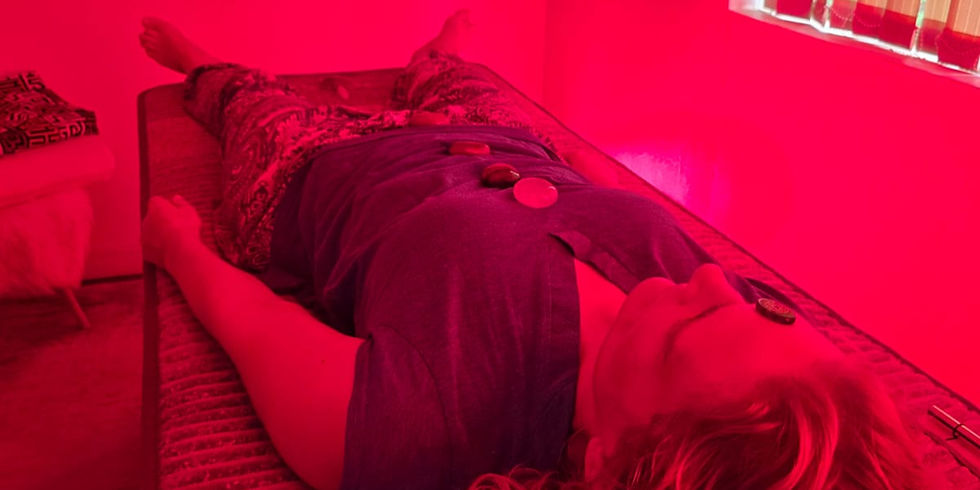
Family and Organisational Constellations sessions are available as standalone sessions or integrated into a broader programme of energy, frequency, and systemic work.
If something in your pattern your health, your relationships, your recurring themes feels larger than your own story, it may well be. This is where we look.
Book a session at aliadatoo.com


Comments